
A large tree in the garden: what a Costa Blanca house buyer should check
If buying a house depends on removing a tree or altering the garden, first establish its protected status and the appropriate route for checking the project. Private ownership does not mean an absence of restrictions.
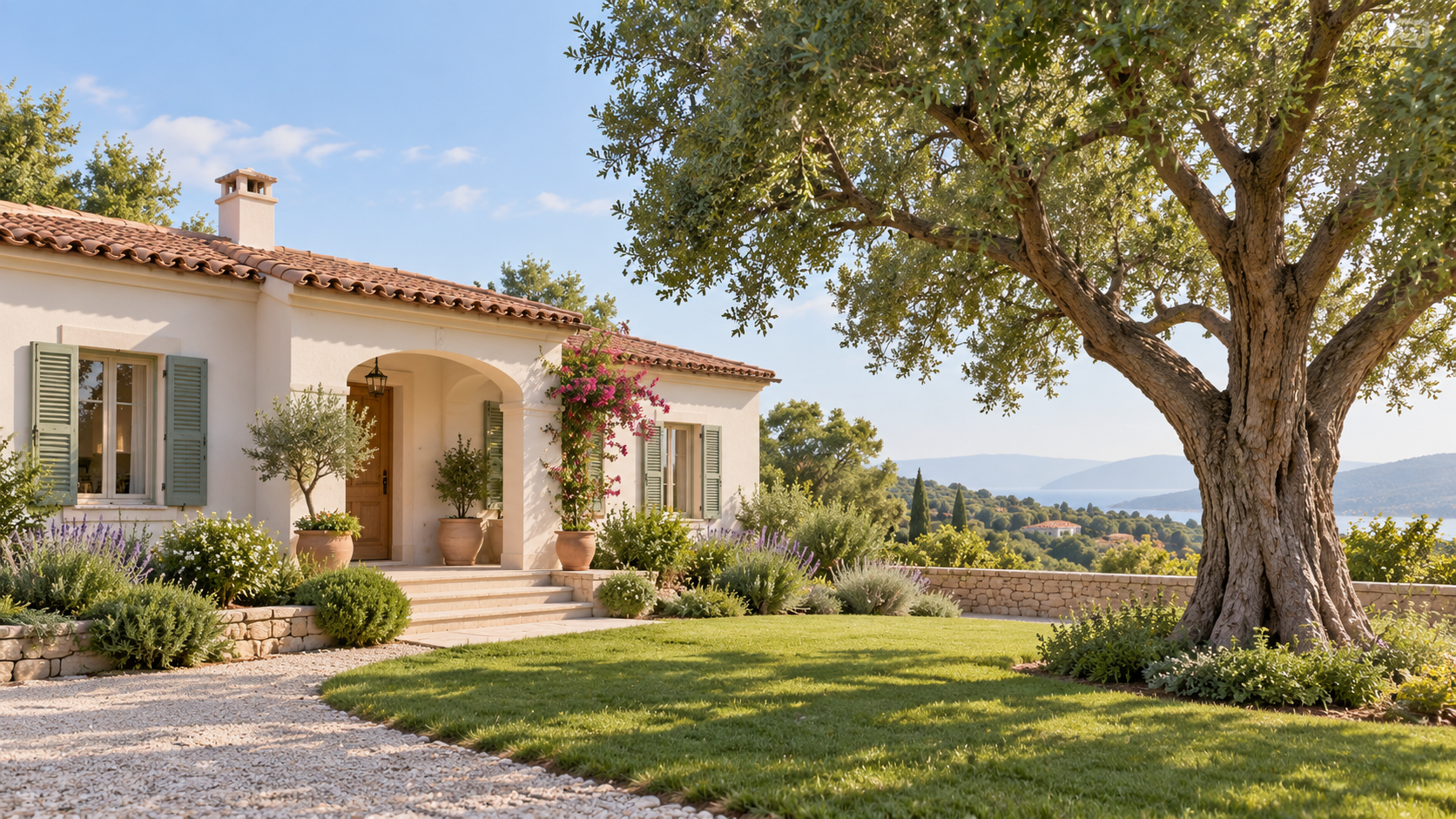
Neutral editorial AI illustration of a house and a large tree in a garden; it does not depict a particular plot or confirm the tree's protected status or whether it can be removed.
A large tree can be a reason to choose a house on the Costa Blanca: it provides shade and makes the garden attractive. Yet buyers sometimes intend to alter that same plot by widening the entrance, adding a swimming pool or replacing paving. Before costing such a project, it is useful to establish whether it depends on removing the tree, pruning its crown or disturbing the ground nearby. The house price and an appealing sketch do not answer whether the proposed option is permissible.
This article concerns protected trees in the Comunitat Valenciana, including private plots in Alicante province. It is not a tree-felling guide, an assessment of a particular tree's stability or a universal approval procedure for all garden work. The buyer's task is to obtain a property-specific answer about the tree's status and the applicable route before an unconfirmed project becomes the basis for the purchase.
1. Start with the alteration without which the house would not suit you
Divide your wishes into two groups. The first involves using the garden as it stands. The second includes plans requiring substantial changes to the tree or the space around it. For example, a contractor's proposal may assume there will be no tree where a future driveway is intended. Until that solution's permissibility has been checked, it is a conditional option rather than an established advantage of the property.
During the viewing, record exactly which tree is concerned: its position relative to the house, boundary, gate and proposed work. General photographs and a clear sketch help prevent discussion of a different specimen. Do not dig into the ground, strip the trunk or cut branches yourself to take measurements. Safely gathered information is enough for an initial enquiry; a professional will determine the necessary scope of investigation.
Ask the seller a specific question: are there documents about this tree's status, previous enquiries and approved work around it? An answer that “the garden has always been private” describes use of the land but does not resolve the conservation question. An answer that “the neighbours did it” does not establish the rules for the chosen tree either.
2. A private garden and protected status are not opposites
Comunitat Valenciana Law 4/2006 protects specimens covered by its provisions regardless of the nature or ownership of the land. It distinguishes general protection based on specified characteristics from an express declaration of protected status; municipal protection of local importance is also provided for. Failure to find an individual record therefore does not prove that no protection exists.
For the buyer, this does not mean personally declaring the tree a monument. It means avoiding the opposite conclusion from a single empty search result. State in the enquiry that you need to establish whether protection applies to the particular specimen, not merely whether an icon appears on a map. If the reply concerns only the presence of a record, other grounds for protection remain a separate question.
Do not determine legal status from an impression of age, an everyday species name or a comparison with a photograph of a neighbouring garden. Even an accurate measurement of one characteristic does not replace professional identification and examination of the applicable conditions. This article deliberately offers no household formula such as “below this size, it can be removed”: that conclusion would be too broad.
3. Use the official catalogue as a starting point
The Generalitat's official dataset contains the locations and categories of trees in the Comunitat Valenciana catalogue of monumental and singular trees. Its published information page links to mapping resources and catalogue documents. It is an appropriate starting source for finding information, but the dataset page itself is not permission to carry out work on your plot.
If you find a match, retain not only the map image but also the available specimen reference, the source and the date viewed. Compare the location with the tree in question: a similar place name or the nearest marker does not guarantee a match. If the information is insufficient, put the question to the municipality with a precise description of the location and ask which authority can confirm its status.
If no match is found, record exactly that result: “a record was not identified in the source viewed”. Do not replace it with “there are no restrictions”. Separately ask about a local catalogue and how to check general protection. This careful distinction is especially important when the purchase depends on being able to alter the garden.
4. Request the tree's history, not a promise of future permission
Collect any replies from authorities, survey documents and records of earlier interventions that the seller holds. This is a practical list for understanding the situation, not a claim that every sale requires the same mandatory document pack. The absence of an individual document does not by itself establish that the seller has broken the law; it shows which question cannot yet be treated as confirmed.
For each document found, check the address, description of the tree, applicant and matter considered. Permission for particular work in the past should not be applied to a different project without checking. A report on the tree's condition, a protection decision and approval for an intervention answer different questions. If the documents conflict, ask a professional to explain their relationship rather than choosing the most convenient wording.
Photographs of the garden in the past can aid discussion, but do not replace a current assessment. Do not promise a contractor access for preparatory work until you understand exactly what they intend to do and whether approval is needed. An ordinary landscaping quotation does not confirm that its assumptions are permissible at that location.
5. Do not confuse a protection proposal with permission to intervene
The Generalitat has procedure 19058 for proposing express protection for monumental or singular trees and groups of trees. It provides for technical assessment and consideration of the relevant protection; the landowner's consent is required. It is not an application for permission to fell, transplant or prune a tree.
If this is the procedure you find while searching for an answer, first compare its purpose with your task. A buyer who needs to establish whether a garden project is permissible should not submit a random application simply because its title includes the word “tree”. Explain the purpose of your enquiry in ordinary language and ask the competent authority to identify the appropriate route.
You can separate two questions in the enquiry: which rules apply to the specimen, and what procedure is needed for the intervention described? Do not present an answer to the first as approval of the second. Keeping the enquiry reference helps track the discussion, but the number itself does not signify a favourable decision.
6. Assess the space around the tree, not just the trunk
The law protects more than the specimen itself: it restricts damaging interventions and provides requirements for work in its surroundings. For construction work near a protected tree covered by the law, having a building licence does not remove the need for the relevant permission under this regime. Its specific application must be checked against the location and project.
The idea that “we will keep the tree and simply change the ground nearby” therefore also needs a substantive discussion. Give the technical professional the plan for future surfacing, trenches, machinery access or structures. Ask them to identify actions affecting the tree and its surroundings. Do not set a safe distance yourself using advice from the internet: this article contains no engineering calculation and does not define the protected area on your plot.
A reasonable outcome of the check is a description of possible options, necessary clarifications and restrictions, rather than a promise that the original sketch will certainly be realised. It may be useful to compare retaining the existing garden with a different layout. Costs should be assessed after the conditions have been clarified, not on the assumption that permission will inevitably be granted.
7. Separate garden maintenance from approval of a new project
Do not turn caution into the opposite universal rule that any maintenance of any tree is prohibited. The law distinguishes types of action and provides conditions and exceptions. But permission for a particular intervention cannot be inferred from a general statement about keeping the garden tidy. The scope of work, specimen's status and competent authority must be established for your situation.
If the seller says removal is needed because the tree is diseased or dangerous, request a professional basis and confirmation of the required procedure. This article cannot assess the risk of a tree falling from a photograph and does not advise delaying a request for help in an immediate danger. Felling it yourself to speed up the sale or start renovations is not a way to resolve documentary uncertainty.
Buyers should distinguish the costs of ordinary maintenance, assessment and possible project changes. Do not combine them into an invented fixed percentage of the house price. Request property-specific proposals with their assumptions stated and separately flag amounts that depend on a reply not yet received.
8. Turn the tree check into a clear decision about the house
Before making commitments, summarise the outcome in separate lines: which tree has been identified; which official information was found; what is known about the applicable rules; which intervention is planned; and which questions remain open. Do not merge everything into “the garden has been checked”. For example, confirmed inclusion of the tree in a catalogue says nothing about approval of the chosen pool or new driveway.
If the house suits you without changing the garden, you can separate the unresolved project from the main property assessment after discussing maintenance and restrictions. If buying it only makes sense once the tree is removed, the uncertainty affects the purchase decision itself. Discuss its implications for payments, timing and contractual terms with a lawyer before making commitments, not after commissioning work.
A useful outcome is not a promise that there are no obstacles, but a clear boundary between what is established and what is assumed. A plot on the Costa Blanca may remain attractive with the tree retained, but that should be your informed choice. A sale listing, a proposed garden layout and a catalogue search do not individually establish whether an intervention is permissible.
Official materials for checking a protected tree on private land
Sources were read on 31 October 2026. The law, catalogue and procedure below serve different purposes. This article does not establish an individual tree's status, the completeness of the seller's documents or the permissibility of a particular project.
The material is for informational purposes only. Check the legal and financial terms of a specific transaction with relevant specialists.
Select real estateDiscuss with Laverna