
How to read an electricity bill for a Spanish apartment
A practical approach to reading an electricity bill: address and period, payment lines, additional services, discounts and written clarifications without promises of savings.
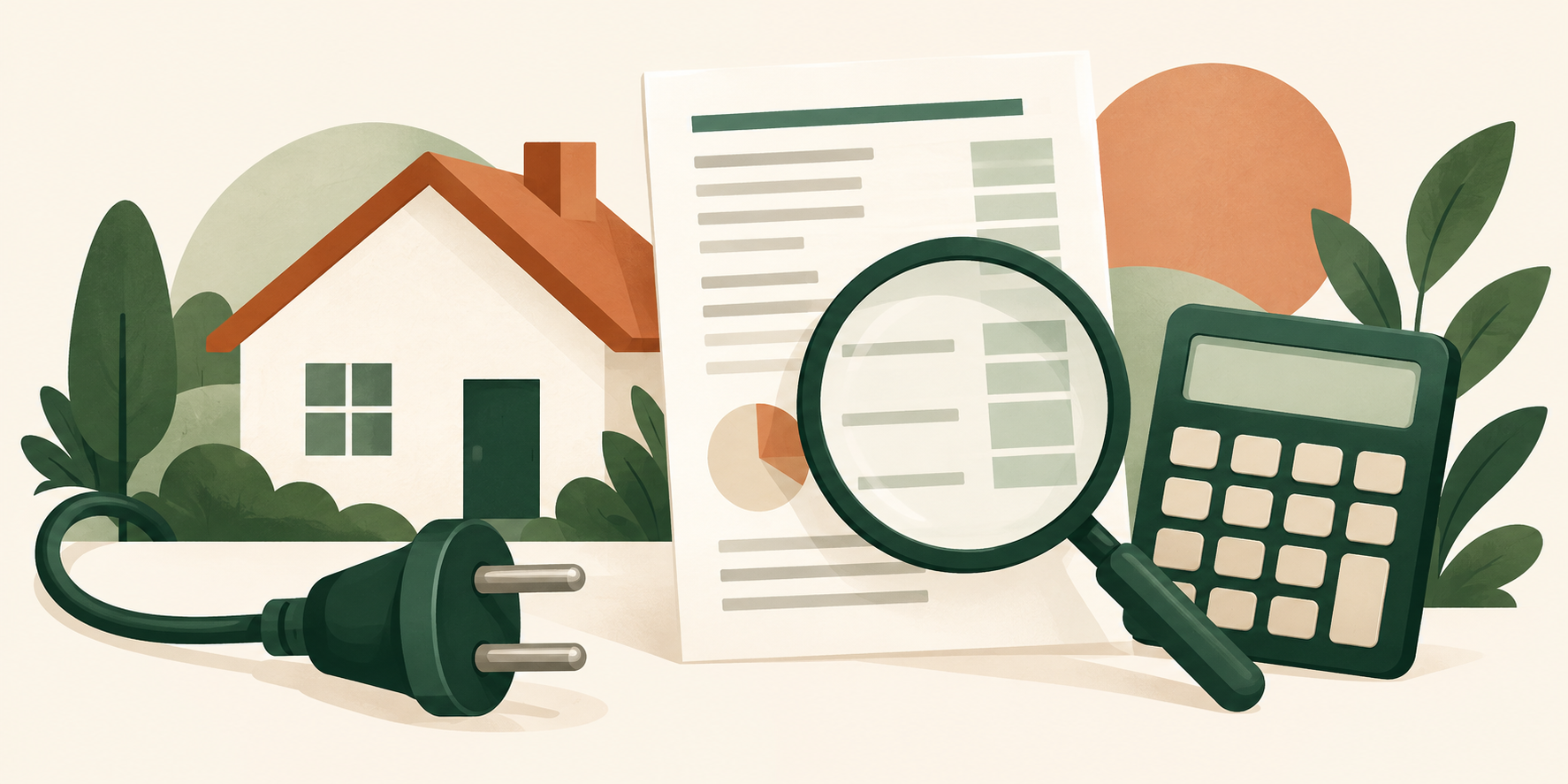
Editorial AI illustration of an electricity bill review; it contains no real bills, personal data or current tariffs.
When the first electricity bill arrives for a Spanish apartment, it is easy to look only at the total and compare it with expectations. But that does not explain the period covered, which services are included or why it differs from the previous bill. It is more useful to break the bill down into understandable parts once, then follow the same checking routine each month. This helps identify a question about a charge without treating every increase as an error.
This article is about reading the document, not choosing contracted power or a particular tariff. It provides no current prices, tax rates, guaranteed savings or universal “correct” consumption for an apartment. The proposed approach is an editorial working framework for homeowners: gather information, compare it with the contract and ask the company a precise question.
A short reference: what CNMC explains
CNMC distinguishes between the distributor, responsible for the network and metering, and the electricity retailer — comercializadora— which issues the bill. The regulator's explanation lists the components of payment: energy, regulated costs, the retailer's remuneration and taxes; depending on the terms, meter rental and separately identified additional services may also apply. The fixed component is usually linked to contracted power, and the variable component to consumption; other arrangements are possible, such as a fixed monthly payment. The bill includes contract and supply-point identifiers, including CUPS, the billing period, consumption information and contact details for enquiries. CNMC directs questions about the bill itself to the retailer, and questions about metering and readings to the distributor. CNMC's official explanation of electricity supply and bills.
This foundation is enough to keep two tasks separate: understanding the document and deciding whether to change the contract. First establish exactly what has been charged. Only then does it make sense to discuss offers, maintenance or other terms. A large total alone does not reveal which part of the contract should be changed.
Start with the address and period, not the price
Check that the document concerns the correct property and contract. This is particularly useful when an owner has several properties, has recently bought an apartment or receives bills through a property manager. You can use a short property name in your own folder, but the check should retain an exact match with the address and identifiers on the document. Similar development names are no substitute for this verification.
Next, note the start and end of the billing period, the issue date and the payment deadline stated on the bill. Do not combine these into a single date. A document received at the beginning of a month may cover a different interval. When comparing two bills, first check the length of both periods: comparing totals alone for different numbers of days can mislead.
After moving in, it is useful to record separately which days relate to your use of the property and compare them with the completed handover documents. Do not try to settle a dispute about allocating costs between seller and buyer from a single line on a bill. If there is a discrepancy, gather the dates and agreements, then clarify the calculation method with the relevant parties to the transaction.
Map out the charges
Copy the names of the main line items into a simple table. Leave space alongside each for the amount, the calculation unit and a reference to the relevant contract term. Do not rename an unfamiliar line “unnecessary fee”: keep its original name first. This makes your question to the company specific and helps you match its answer to the document itself.
Separate electricity charges from other services and one-off adjustments, where shown. If a line is divided into several periods or rates, do not manually combine it into a new “single price” and lose the explanations. Record the structure as presented and ask why it has been split if that is unclear. At this stage, your task is to read the calculation, not invent a more convenient but inaccurate version.
For your own arithmetic check, use the values and units stated in the document. Rounding and the calculation sequence may need explaining, so a small difference between your multiplication and the total should not immediately be called a breach. Keep a record of the exact operation you performed and ask for the calculation behind the disputed line.
Do not confuse consumption with cost
Keep separate columns in your working table for energy quantities and monetary amounts. This allows two different questions: has electricity use changed, and have the payment terms changed? Looking only at the debit from your bank account can easily blur the distinction. Your own table remains a checking tool, not proof of what caused a change.
Alongside the period, you can briefly record how the property was used: it stood empty, guests stayed, renovation work took place or new equipment was used for the first time. These notes help you recall the context months later. But do not attribute the entire consumption increase to one appliance without data: a coincidence in timing does not explain the size of the change.
If the bill includes a chart, check its labels and units before comparing the bars. Establish which periods it covers and whether they match your table. A coloured chart is useful for an overview, but a question about a specific charge is best framed around the corresponding line and period, rather than an impression of a bar's height.
Check additional services separately
For each service not directly related to electricity consumption, find the contract or confirmation of the agreed terms. Record its name, purpose, cost on the document and the question you need clarified. For example, the scope of maintenance or the service's connection with another contract may be unclear. Do not decide that a service is necessary simply because its name sounds useful.
If you want to cancel a service, first read the terms and obtain a clear explanation of the procedure. Do not assume that deleting an app, ignoring a bill or changing the payment method automatically resolves the contractual issue. This article sets no universal cancellation procedure: for a specific case, check the documents and the company's current explanation.
When comparing offers, create two separate lines: supply and additional services. Otherwise, an offer with an attractive headline may be compared with a completely different package of terms. Do not promise yourself a predetermined saving: first compare the same scope of services, billing period and rules governing price changes.
How to check a discount or an unclear adjustment
If the document shows a discount, read which line it applies to. In your notes, record not only the percentage or amount but also the calculation basis, if described. Do not extend the discount to the whole bill on the strength of a single promotional word. When the terms are unclear, request a written explanation identifying the contract clause and validity period.
Link an adjustment or recalculation to the original document: which bill is being corrected, for which dates and why? Keep both versions together rather than replacing the old one with the new one without explanation. If the documents do not allow you to reconstruct the sequence, ask the company for a consolidated explanation. A short chronology is more useful in your folder than a collection of files all called “electricity”.
Prepare a precise bill enquiry
A good enquiry includes the document number, the disputed line, the period and one clear question. For example: “Please explain the basis for charging this service and identify the corresponding term in my contract.” For a calculation discrepancy, give the values you used and ask for the difference to be explained. Avoid a long list of assumptions before the charging mechanism itself has been clarified.
Use the company's official contact details from a verified contract or bill. Do not send the full document to a stranger promising to reduce your payment urgently. A bill may contain personal and contractual information; when discussing it with an agent or relative, conceal details not needed for the question. For an official enquiry, provide only the information necessary to identify and examine the case.
Keep the enquiry you sent, confirmation that it was received and the reply. If the reply does not address your question, specify which line remains unexplained. Do not decide to withhold payment solely on the basis of this article: a dispute about a charge and decisions about payment require a separate understanding of your terms and the consequences.
Make the first review a useful habit
Name files by property and billing period. A short log need only contain the document date, period, consumption, total, additional services and open questions. Keep the contract and amendments separately. This approach helps when handing matters over to a property manager and lets you return to a specific question without searching your email again.
After the company replies, update your note: what has been confirmed, what has been corrected and what remains unclear? Do not mark an issue as closed merely because a phone conversation took place. A useful outcome is a clear link between the bill line, the contract term and the explanation received. This does not guarantee lower costs, but it makes managing the apartment more transparent.
Sources and verification date
On 29 October 2026, we read CNMC's “Comercialización y suministro eléctrico”, specifically the sections on company roles and bill components. The brief factual foundation appears at the start of this article. The table, checking sequence and sample questions are Laverna's editorial recommendations. Current prices, tax rates, individual contract terms and the amount of any potential saving are not established here.
The material is for informational purposes only. Check the legal and financial terms of a specific transaction with relevant specialists.
Select real estateDiscuss with Laverna